Behind the scenes of PHP2Shell: What the last 72 hours taught us
Summary
- Published
- Collected
📦 Full-Text Content Snapshot
R2 Archive · Full Article PreservedPublished on: 2026-10-23 · Source: bugcrowd.com
Behind the scenes of PHP2Shell: What the last 72 hours taught us
October 23, 2026 | By Nick McKenzie | Bugcrowd CIO and CSO
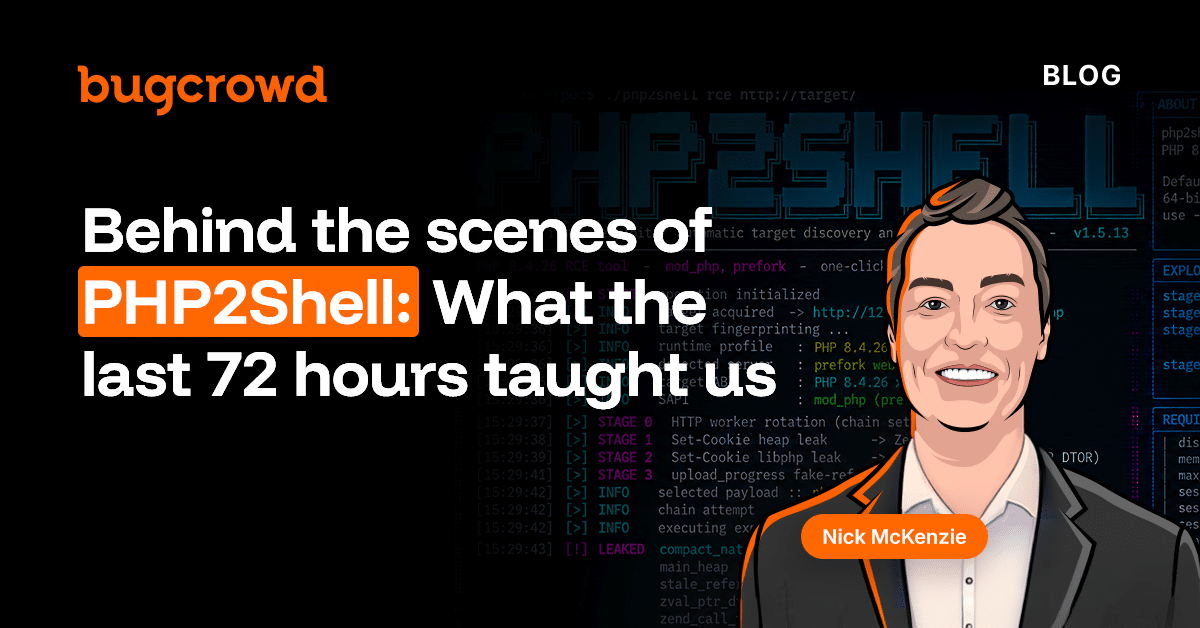
Earlier this week, two critical remote code execution vulnerabilities in PHP, now known as PHP2Shell, set off a global scramble. PHP is the scripting language behind a huge share of the web, and the flaws put internet-facing sites and applications at risk. Government agencies issued warnings, hundreds of websites were taken offline as a precaution, and exploit code began circulating before many organizations had a fix to apply.
The technical details are well covered. This post is about what those 72 hours looked like from the CISO’s chair: how security and business leaders made decisions under pressure, what worked, and what other CISOs can take into the next critical vulnerability.
It started, as these things often do, with chatter in intel feeds and signal groups, followed soon after by formal alerts from CERTs and government agencies. AWS reported seeing exploitation attempts dating back to October 17, four days before public disclosure. The response window can close before most organizations know there is a problem.
The hard conversations CISOs are having
The technical work is the easier half. Teams checked their exposure, poked at the public exploits to see if they applied in their own backyard, and put compensating controls in place, things like WAF rules or switching off exploitable processes on vulnerable assets. Where those worked, things stayed pretty quiet.
Where they couldn’t be applied, it got ugly. I’d bet there were plenty of cyber teams and CIO or business technology teams at each other’s throats over the right call, with no patch in sight and the flaws hitting legacy, end-of-life PHP builds. This is where cyber risk and business risk collide on priorities: stay exposed and risk being breached, or pull the vulnerable application offline and drop a business-critical workflow. Both sides have a fair point. The CIO owns uptime and platform resilience, the CISO owns the exposure, and neither mandate goes away just because the pressure is on.
What helps is getting clear fast. Someone accountable has to make the business call, and everyone needs to see what each path costs before they commit.
What worked, and what we’d reinforce
Three things made the biggest difference:
- Solid intelligence intake from both CERT organizations and the wider security community
- Incident response processes that were formal enough to follow and fluid enough to adapt
- Accountable owners were empowered to make the call.
The bigger lesson is that vulnerabilities like this don’t keep business hours. They can land at 2 a.m. or mid-afternoon, and waiting for a vendor patch while the internet catches fire is not a strategy. As time-to-exploit shrinks, round-the-clock response stops being a luxury.
Three lessons for other CISOs
- Decide before the crisis. Agree who makes the call when security and IT disagree, and what “take it offline” means for each critical application, before you need it.
- Build compensating controls in advance. A WAF rule you can deploy today beats a patch promised for later.
- Know where your software runs. You can’t make a risk decision about an asset you don’t know you have, and PHP often sits quietly beneath sites, tools, and third-party products.
Preparing for the next one
There will be a next one, and the real test is how fast you can answer “where are we exposed?” Continuous attack surface visibility with Savant Vista helps organizations identify potential exposures and prioritize action, so the next critical vulnerability starts with a plan rather than a scramble.
Tags:
- Attack Surface Management
- bugcrowd
- CISO
- compensating controls
- critical vulnerability
- cyber risk
- end-of-life software
- incident response
- legacy software
- PHP vulnerability
- PHP2Shell
- RCE
- remote code execution
- security leadership
- threat intelligence
- vulnerability management
- WAF
- zero day
More from the blog
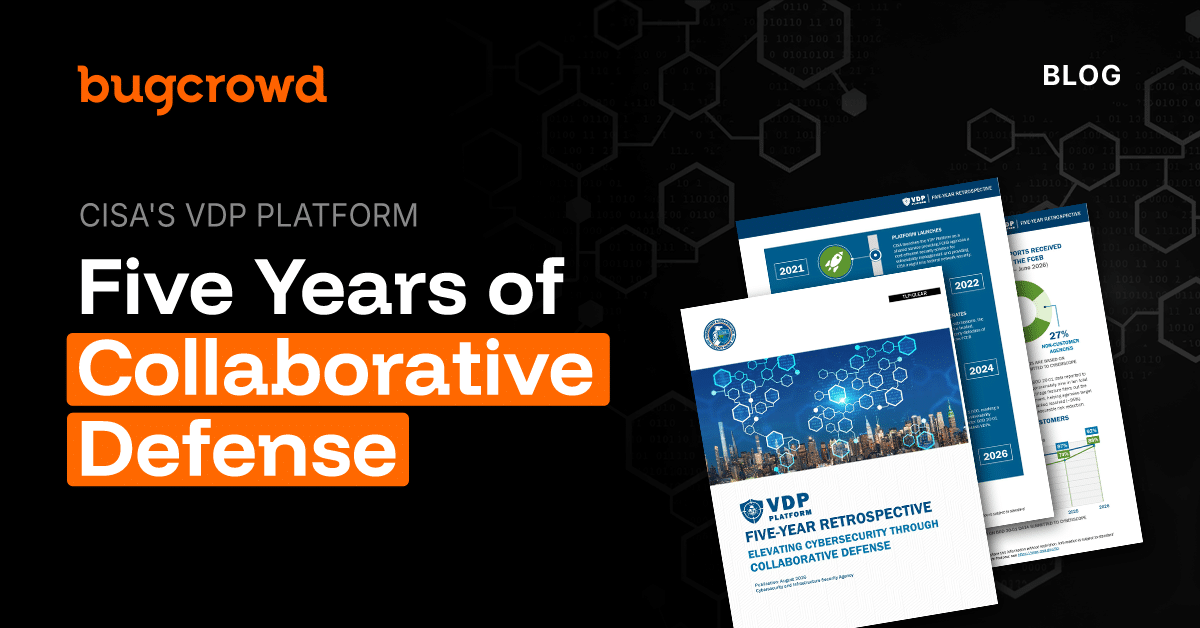
CISA’s VDP platform: Five years of collaborative defense
By Erica Azad, Oct 23, 2026
Weird ways to hide shellcode
By Jack Barradell-Johns I Principal Red Team Manager, Oct 15, 2026
Evolving our submission accuracy and throttling controls to protect triage speed
By Trey Ford, Oct 08, 2026
Subscribe for updates
📦 Full-Text Markdown Snapshot archived by Phying News · Original source: bugcrowd.com
--- id: 10393 title: "Behind the scenes of PHP2Shell: What the last 72 hours taught us" cve: null cvss: null severity: "unknown" vendor: null product: null affected_versions: null source_domain: "bugcrowd.com" source_url: "https://www.bugcrowd.com/blog/behind-the-scenes-of-php2shell-what-the-last-72-hours-taught-us/" published_at: "2026-10-23T17:05:15Z" snapshot_at: "2026-10-28T23:55:47Z" archived_by: "Phying News (https://phying.com/item/10393)" lang: en --- # Behind the scenes of PHP2Shell: What the last 72 hours taught us *Published on: 2026-10-23 · Source: [bugcrowd.com](https://www.bugcrowd.com/blog/behind-the-scenes-of-php2shell-what-the-last-72-hours-taught-us/)* [Cybersecurity News](https://www.bugcrowd.com/blog/?t__category=19) # Behind the scenes of PHP2Shell: What the last 72 hours taught us October 23, 2026 | By [Nick McKenzie | Bugcrowd CIO and CSO](https://www.bugcrowd.com/blog/?a__author=47)  [Back to blog](https://www.bugcrowd.com/blog/) Earlier this week, two critical remote code execution vulnerabilities in PHP, now known as PHP2Shell, set off a global scramble. PHP is the scripting language behind a huge share of the web, and the flaws put internet-facing sites and applications at risk. Government agencies issued warnings, hundreds of websites were taken offline as a precaution, and exploit code began circulating before many organizations had a fix to apply. The technical details are [well covered](https://www.darkreading.com/application-security/php2shell-bugs-red-alert-security-industry). This post is about what those 72 hours looked like from the CISO’s chair: how security and business leaders made decisions under pressure, what worked, and what other CISOs can take into the next critical vulnerability. It started, as these things often do, with chatter in intel feeds and signal groups, followed soon after by formal alerts from CERTs and government agencies. AWS reported seeing exploitation attempts dating back to October 17, four days before public disclosure. The response window can close before most organizations know there is a problem. ## The hard conversations CISOs are having The technical work is the easier half. Teams checked their exposure, poked at the public exploits to see if they applied in their own backyard, and put compensating controls in place, things like WAF rules or switching off exploitable processes on vulnerable assets. Where those worked, things stayed pretty quiet. Where they couldn’t be applied, it got ugly. I’d bet there were plenty of cyber teams and CIO or business technology teams at each other’s throats over the right call, with no patch in sight and the flaws hitting legacy, end-of-life PHP builds. This is where cyber risk and business risk collide on priorities: stay exposed and risk being breached, or pull the vulnerable application offline and drop a business-critical workflow. Both sides have a fair point. The CIO owns uptime and platform resilience, the CISO owns the exposure, and neither mandate goes away just because the pressure is on. What helps is getting clear fast. Someone accountable has to make the business call, and everyone needs to see what each path costs before they commit. ## What worked, and what we’d reinforce Three things made the biggest difference: 1. Solid intelligence intake from both CERT organizations and the wider security community 2. Incident response processes that were formal enough to follow and fluid enough to adapt 3. Accountable owners were empowered to make the call. The bigger lesson is that vulnerabilities like this don’t keep business hours. They can land at 2 a.m. or mid-afternoon, and waiting for a vendor patch while the internet catches fire is not a strategy. As time-to-exploit shrinks, round-the-clock response stops being a luxury. ## Three lessons for other CISOs 1. **Decide before the crisis.** Agree who makes the call when security and IT disagree, and what “take it offline” means for each critical application, before you need it. 2. **Build compensating controls in advance.** A WAF rule you can deploy today beats a patch promised for later. 3. **Know where your software runs.** You can’t make a risk decision about an asset you don’t know you have, and PHP often sits quietly beneath sites, tools, and third-party products. ## Preparing for the next one There will be a next one, and the real test is how fast you can answer **“where are we exposed?”** Continuous attack surface visibility with [Savant Vista](https://www.bugcrowd.com/products/vista/) helps organizations identify potential exposures and prioritize action, so the next critical vulnerability starts with a plan rather than a scramble. Tags: * [Attack Surface Management](https://www.bugcrowd.com/blog/?t__post_tag=245) * [bugcrowd](https://www.bugcrowd.com/blog/?t__post_tag=45) * [CISO](https://www.bugcrowd.com/blog/?t__post_tag=127) * [compensating controls](https://www.bugcrowd.com/blog/?t__post_tag=1898) * [critical vulnerability](https://www.bugcrowd.com/blog/?t__post_tag=1897) * [cyber risk](https://www.bugcrowd.com/blog/?t__post_tag=1902) * [end-of-life software](https://www.bugcrowd.com/blog/?t__post_tag=1901) * [incident response](https://www.bugcrowd.com/blog/?t__post_tag=1013) * [legacy software](https://www.bugcrowd.com/blog/?t__post_tag=1900) * [PHP vulnerability](https://www.bugcrowd.com/blog/?t__post_tag=1894) * [PHP2Shell](https://www.bugcrowd.com/blog/?t__post_tag=1893) * [RCE](https://www.bugcrowd.com/blog/?t__post_tag=1896) * [remote code execution](https://www.bugcrowd.com/blog/?t__post_tag=1895) * [security leadership](https://www.bugcrowd.com/blog/?t__post_tag=1371) * [threat intelligence](https://www.bugcrowd.com/blog/?t__post_tag=1248) * [vulnerability management](https://www.bugcrowd.com/blog/?t__post_tag=352) * [WAF](https://www.bugcrowd.com/blog/?t__post_tag=1899) * [zero day](https://www.bugcrowd.com/blog/?t__post_tag=1191) ### More from the blog  [ Bugcrowd News ](https://www.bugcrowd.com/blog/?t__category=26) #### CISA’s VDP platform: Five years of collaborative defense By Erica Azad, Oct 23, 2026 [ Read More ](https://www.bugcrowd.com/blog/cisas-vdp-platform-five-years-of-collaborative-defense/)  [ Red Teaming ](https://www.bugcrowd.com/blog/?t__category=1225) #### Weird ways to hide shellcode By Jack Barradell-Johns I Principal Red Team Manager, Oct 15, 2026 [ Read More ](https://www.bugcrowd.com/blog/weird-ways-to-hide-shellcode/)  [ Bugcrowd News ](https://www.bugcrowd.com/blog/?t__category=26) #### Evolving our submission accuracy and throttling controls to protect triage speed By Trey Ford, Oct 08, 2026 [ Read More ](https://www.bugcrowd.com/blog/evolving-our-submission-accuracy-and-throttling-controls-to-protect-triage-speed/) ## Subscribe for updates --- > 📦 **Full-Text Markdown Snapshot** archived by [Phying News](https://phying.com/item/10393) · Original source: [bugcrowd.com](https://www.bugcrowd.com/blog/behind-the-scenes-of-php2shell-what-the-last-72-hours-taught-us/)